The city of Joplin has a long and storied connection to lead and zinc mining. In 1870, some twenty years before Schifferdecker and Zelleken homes were constructed, John Sergeant and Elliott Moffet discovered a rich vein of lead along Joplin Creek. Shortly thereafter, the Joplin region became the major supplier of two minerals, lead and zinc.
On March 23, 1873, the city of Joplin, Missouri, was incorporated.
The late Victorian homes of Charles Schifferdecker and Edward Zelleken were constructed at a time of Joplin’s most dynamic growth. From 1890 to 1900 over 10,000 people arrived into our community. This population explosion is one for the history books and has remained unrivaled in Joplin’s proud history. With a population of 26,023 Joplin boasted a larger population than Springfield, Missouri.
The influx of population was directly tied to the steady growth of the lead and zinc mining industry. Many of these new inhabitants were looking for employment opportunities. The zinc mines provided a variety of jobs. The mining district’s work force at the turn of the century numbered 10,000 workers. The standard work week consisted of six, nine-hour days. Wages hovered around $2 per day with shovelers earning more. In 1899 most of the mine related jobs transitioned into eight hour work days.
The mining industry also had a direct connection to the prosperity of Schifferdeckers and the Zellekens. Both families owned hundreds of acres of profitable mining land. They made their fortunes from leasing land to miners who in turn paid 10 to as high as 25% royalties.
Murphysburg Historic District
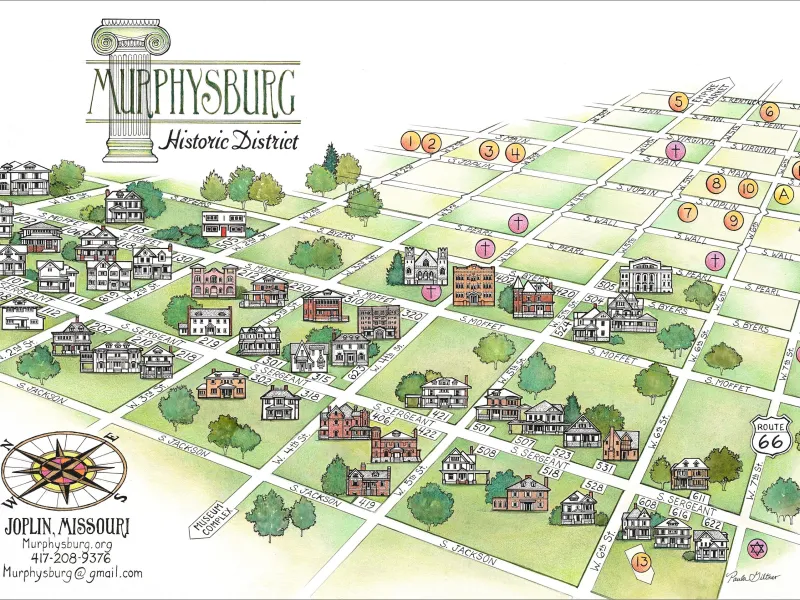
The Schifferdecker and Zelleken homes are located in the Murphysburg Historic District. During the early 1870s, Patrick Murphy, William P. Davis, C. E. Elliott, and William Byers laid out a 40-acre tract west of Joplin Creek and established the township of Murphysburg. By the spring of 1873, the community of Murphysburg would relinquish its name and merge with the adjacent Joplin township. The two mining communities became known as Joplin.
The Murphysburg Historic District was listed on the National Register of Historic Places on May 15, 2015. The Schifferdecker and Zelleken properties are part of the 185 listed contributing structures covering a 22-block region. The homes located in this historic neighborhood represent a variety of architectural revival styles while utilizing a blend of building materials. They also convey and reflect the original owners’ personalities style and taste.
The Schifferdecker and Zelleken homes are located at 422 and 406 S. Sergeant Avenue respectively.
Map used courtesy of Historic Murphysburg Preservation murphysburg.org
Joplin Landmarks of the 1890s No Longer Present
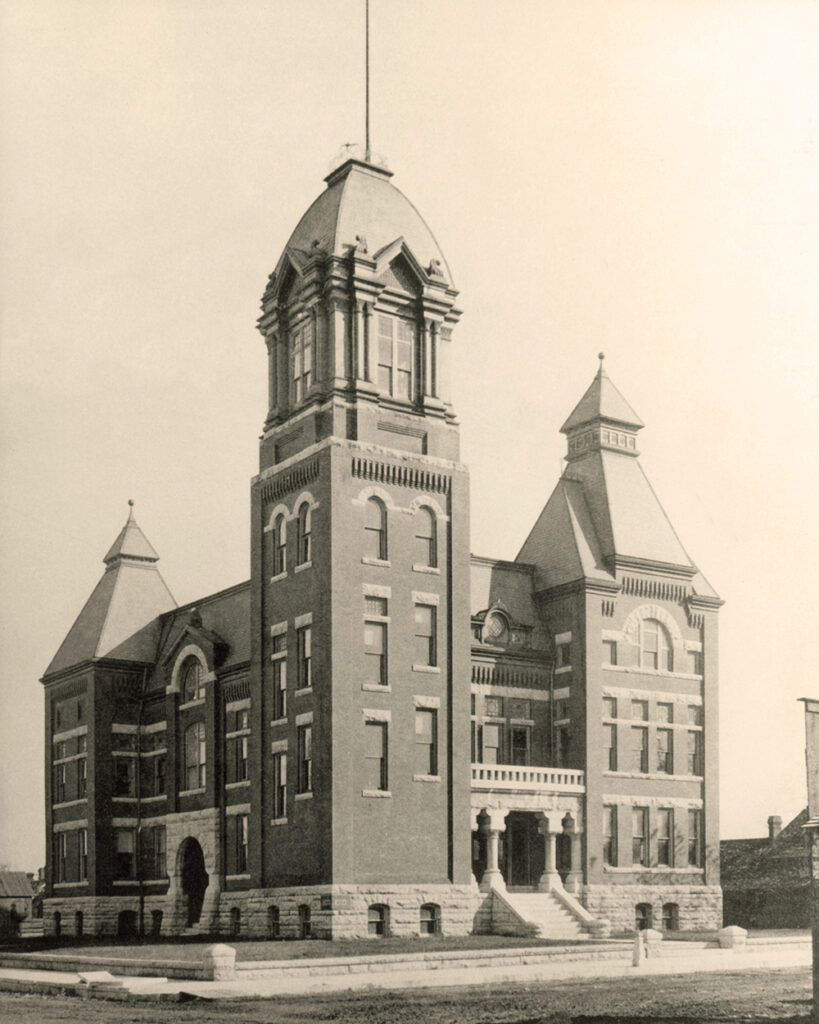
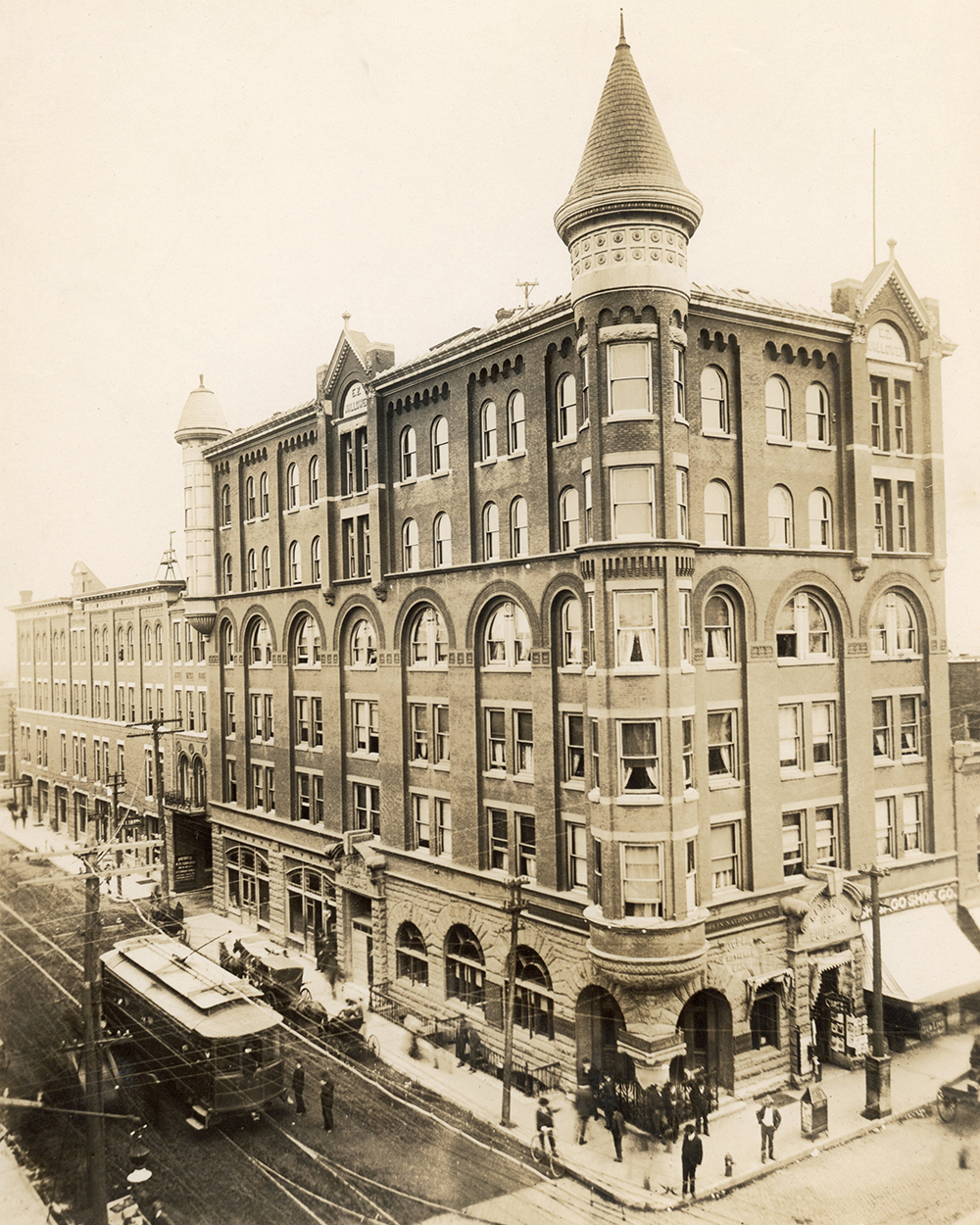
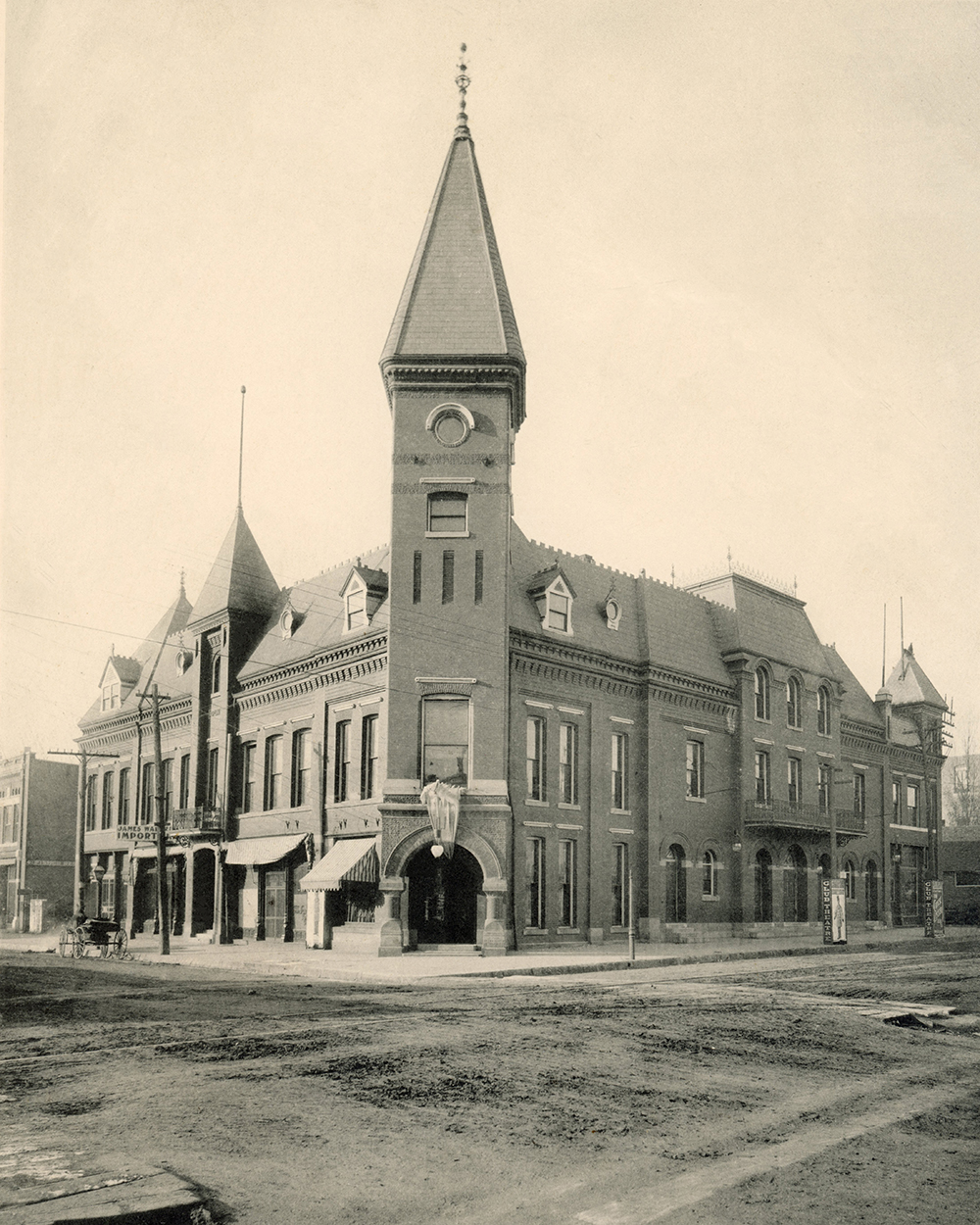
All three structures boast distinctive late Victorian towers.
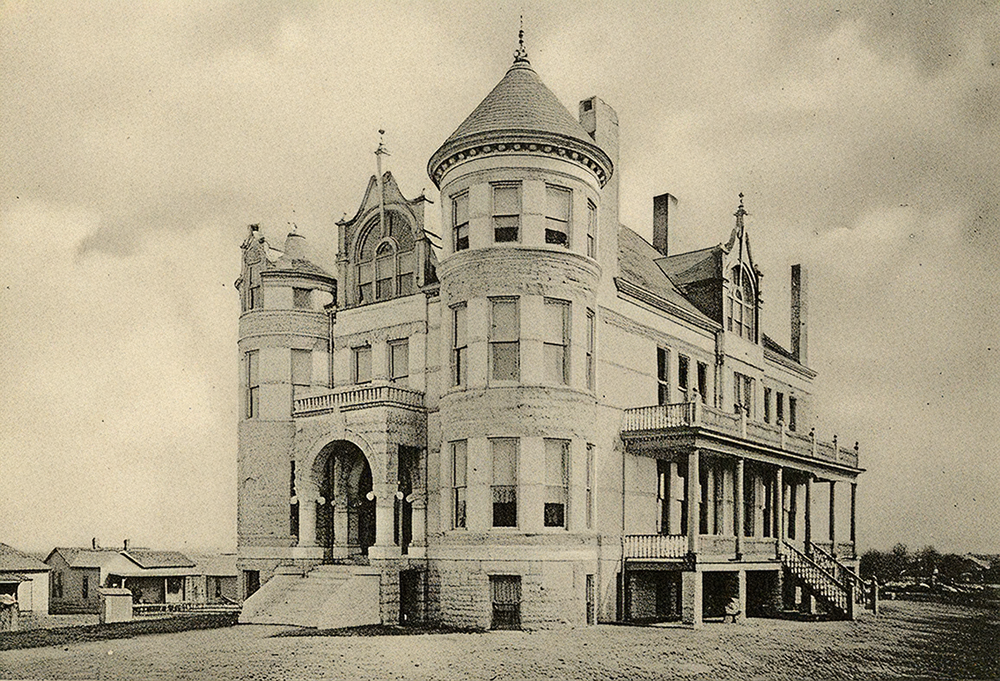
The Joplin Courthouse, 1894, once located at 7th and Virginia Avenue.
Joplin architect William B. Rees designed the $20,000 Joplin Courthouse. The courthouse tower soared to over ninety feet.
The Keystone Hotel, 1892, once located at 403 South Main Street.
The six-story Keystone Hotel boasted Joplin’s first elevator.
The Club Theater, 1891, once located at 402 South Joplin Avenue.
The Club Theater was a popular venue for political, dramatic, and musical events. Boxing heavyweight champions John L. Sullivan and “Gentleman Jim” Corbett, actors Sarah Bernhardt and John Drew appeared at the theater, as did the “Royal Family of the American Stage,” Lionel, Ethel, and John Barrymore.
Significant Structures with Ties to Charles Schifferdercker and Edward Zelleken
St. John’s Hospital
During Joplin’s early development, injured miners were sent away by train or wagon for medical assistance because Joplin lacked a hospital. On October 24, 1900, a dedication ceremony christened the new $40,000, 50-bed St. John’s hospital. Joplin architect August Michaelis designed this Romanesque styled, Carthage limestone structure. Both the Schifferdeckers and the Zellekens were early financial supporters of the hospital. The hospital’s name is derived to honor St. John of God, who served the sick and poor in Portugal.
St. John's Hospital (non-extant)
Scottish Rite Cathedral
The Scottish Rite Cathedral was designed by Herbert M. Greene. Dedicated in 1923, the $350,000 two-story social hall was built in a Beaux-Arts style. Charles Schifferdecker donated the land in which the building sits. He was a Thirty-Third Degree Mason and a member of the Supreme Council of the Scottish Rite brand of the order to Washington.
Scottish Rite Cathedral (extant)
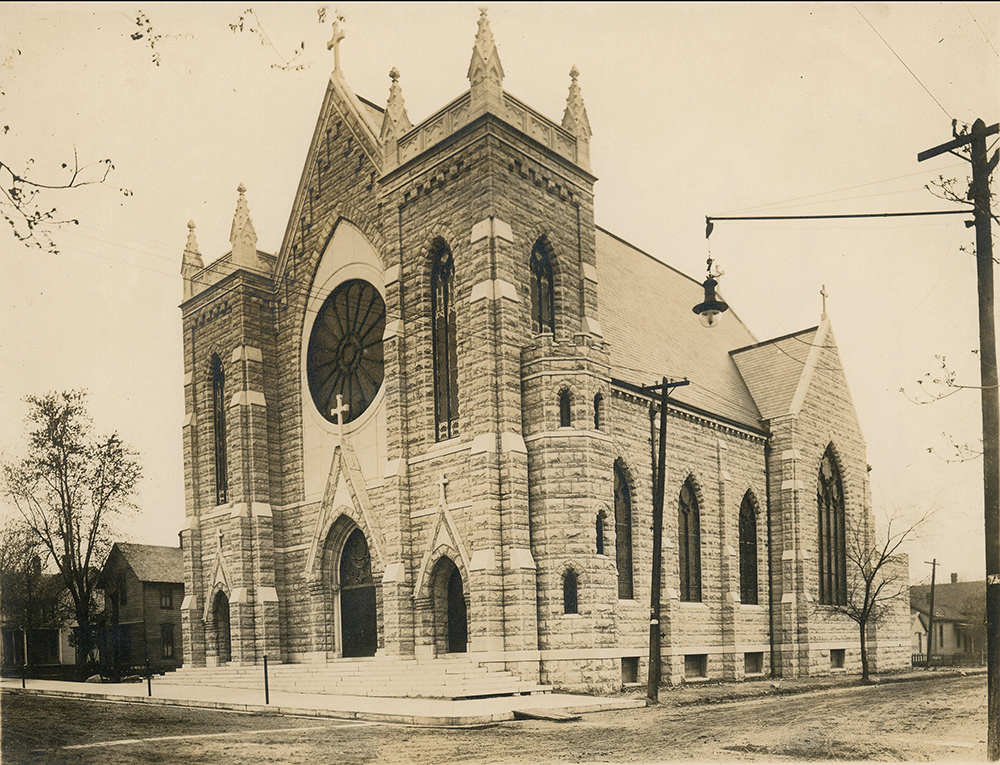
St. Peter the Apostle Catholic Church
Edward Zelleken provided funding to build St. Peter’s Church. The Zellekens were devoted members of the church. Charles Schifferdecker purchased the large round stained glass window that hangs over the front entrance. This impressive art glass window allows the morning sun rays to bathe the 1,000-seat sanctuary and main altar. Constructed in 1906, the Gothic Revival style St. Peter the Apostle Catholic Church was designed by Joplin architect Austin Allen for $50,000.
St. Peter the Apostle Catholic Church (extant)
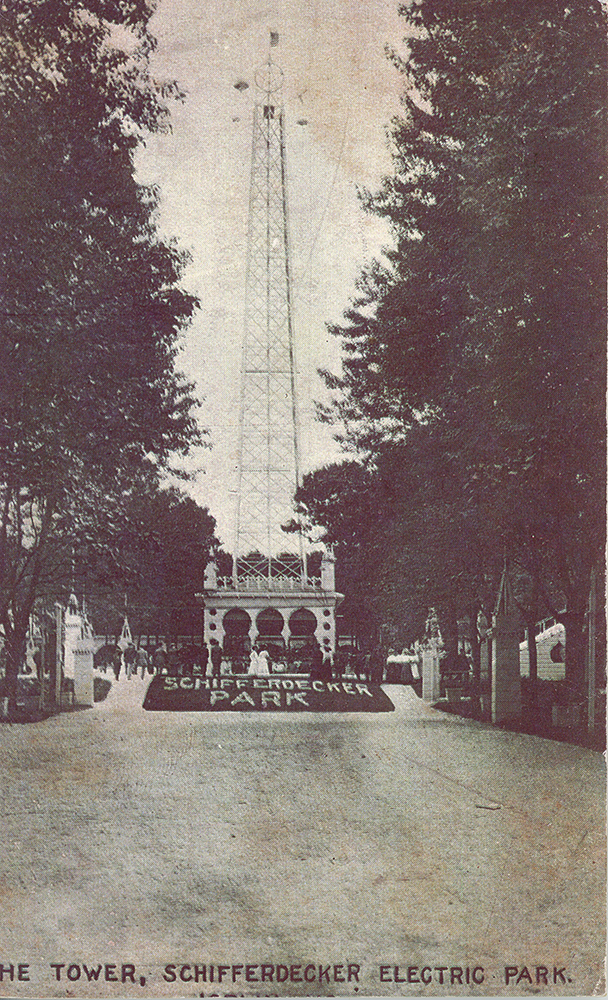
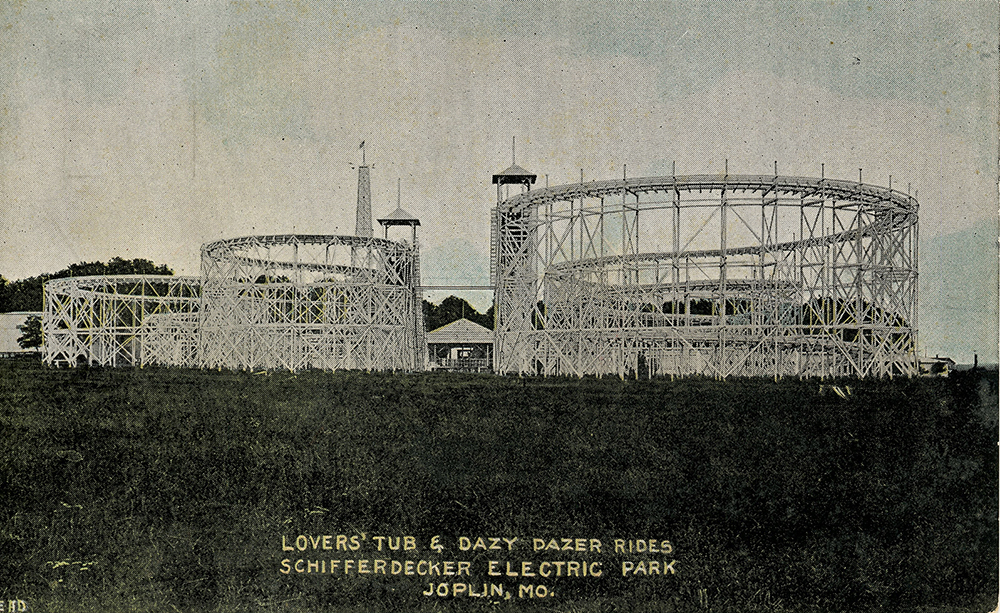
Schifferdecker Electric Park (non-extant)
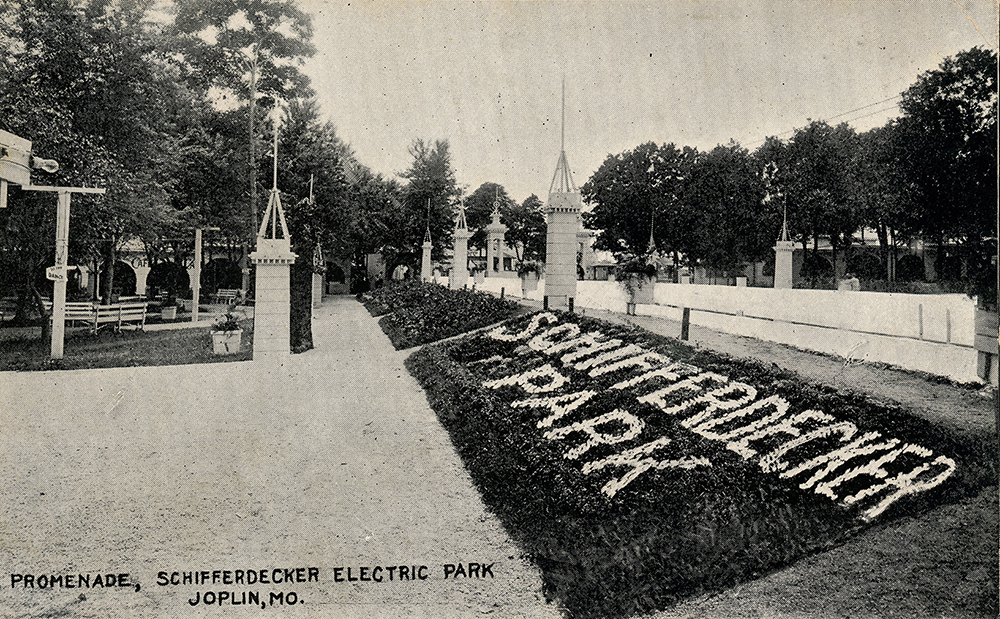
Originally the site of a dairy farm during the 1890s, Charles Schifferdecker purchased this property in the early 1900s, then leased a portion of the land to three local businessmen for the development of Electric Park. The park featured rides, sideshows, animals, musical entertainment, concessions, and souvenir stands. Indianapolis-based architect John H. Stem, who built amusement parks in Kansas City, Kansas, and Newark, New Jersey, selected a distinctive Moorish style for the Joplin site. The theme park represented the new era of electricity as thousands of electric lights draped the structures and most park visitors arrived via electrically powered streetcars. Although the legend of the park prevailed long after it closed, the business operated a short period of time from 1909 to 1912.
Charles Schifferdecker served on the Joplin Park Board. As a park advocate, he graciously donated to the community a 40-acre tract in western Joplin to be used as a city park. Schifferdecker Park is located a mile and a half west on 4th Street. Upon his death, an additional 120 acres were gifted to the city. The park is the home of an 18-hole public golf course, a swimming pool, and a history and science museum.
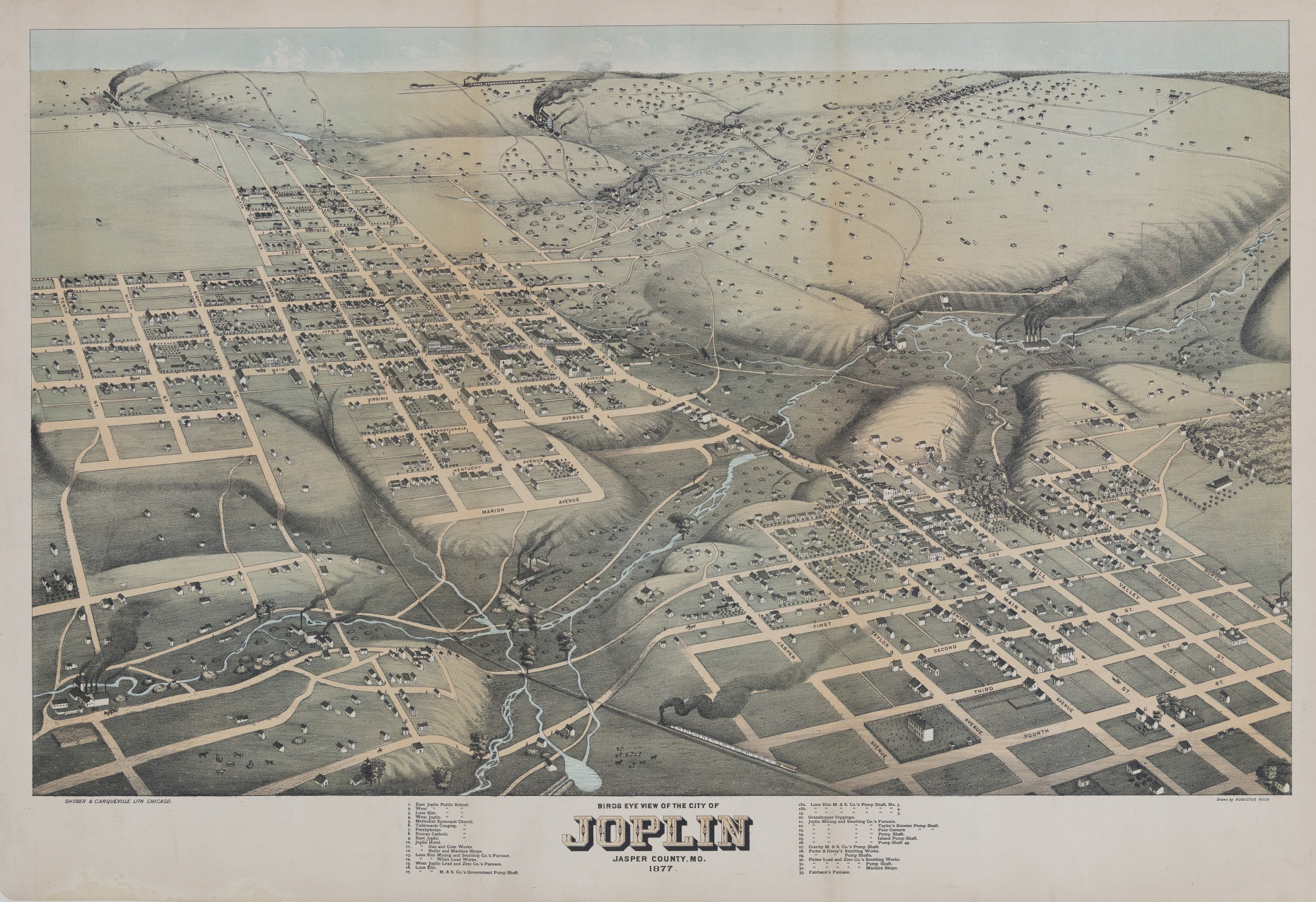
Joplin 1877 Map by Augustus Koch
The 1877 map offers an early glimpse into the community of Joplin four years after incorporation. A special census in 1877 listed Joplin with a population of 7,544. This is one of city’s oldest historical documents.
Augustus Koch (1834-1901) was one of the most prolific and widely traveled artists specializing in drawing panoramic maps of Victorian America. Koch was a cartographer, working for the Chicago firm of Shober & Carqueville Lithographers. These popular wall hangings provided a pictorial record of large and small communities during the post-Civil War period. No other graphic form of this era effectively depicted the vitality of the urban center as did these birds-eye views.
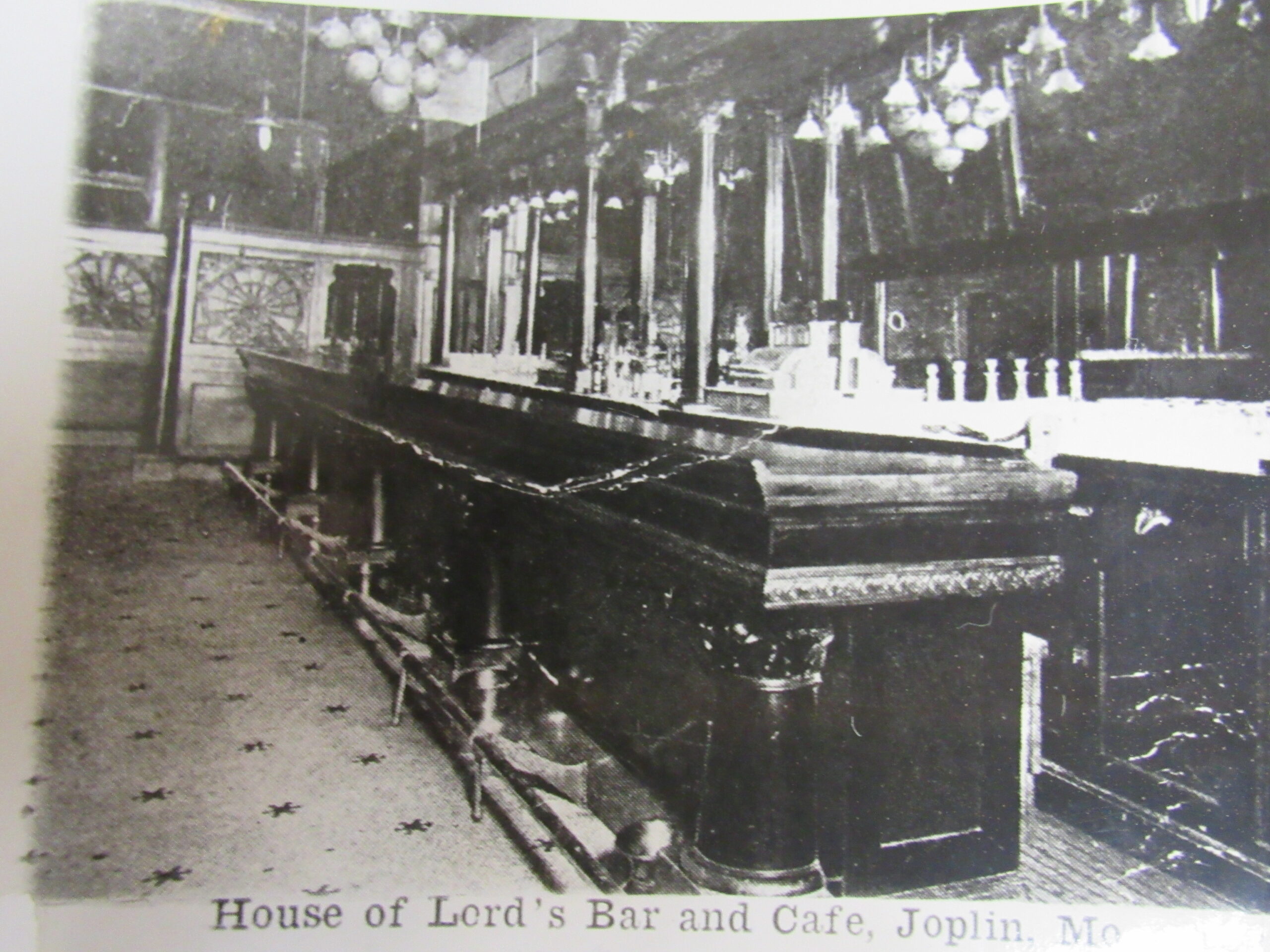
The House of Lords
Established in the early 1890s, the House of Lords (319 South Main) was a three-story building that housed a bar, restaurant, gambling tables and a brothel. The building was razed in the 1960s. Today the site is part of Spiva Park.
A doorknob (indicated as being from bedroom #1) and mirror are only a handful of objects that remain from this storied site and can be viewed at the Museum’s Joplin history exhibit in the Welcome Center.
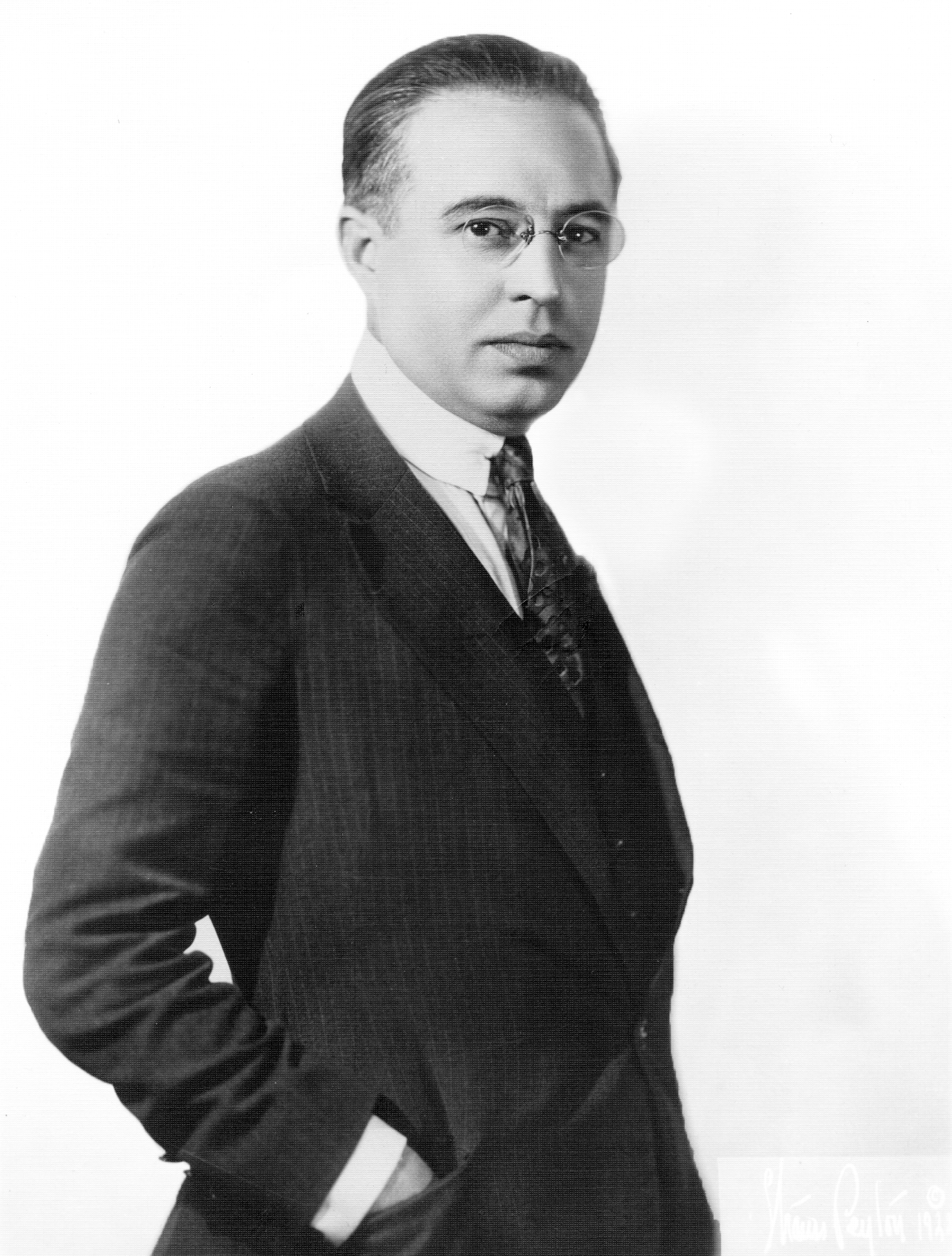
Percy Wenrich
In 1897, Scott Joplin played at the thriving House of Lords. One local resident witnessed his performance: Percy Wenrich. Known as the “Joplin Kid,” Wenrich was born in Joplin in 1880. In 1907, he relocated to New York City to compose music. Over the next 40 years he wrote many melodies, including “Moonlight Bay,” “Silver Bell,” and Joplin’s official city song, “Put On Your Old Grey Bonnet.” Wenrich is a member of the Songwriter’s Hall of Fame.
Note: The city was not named after Scott Joplin, but rather after Methodist minister Reverend Harris Joplin.
Percy Wenrich
Thomas Hart Benton
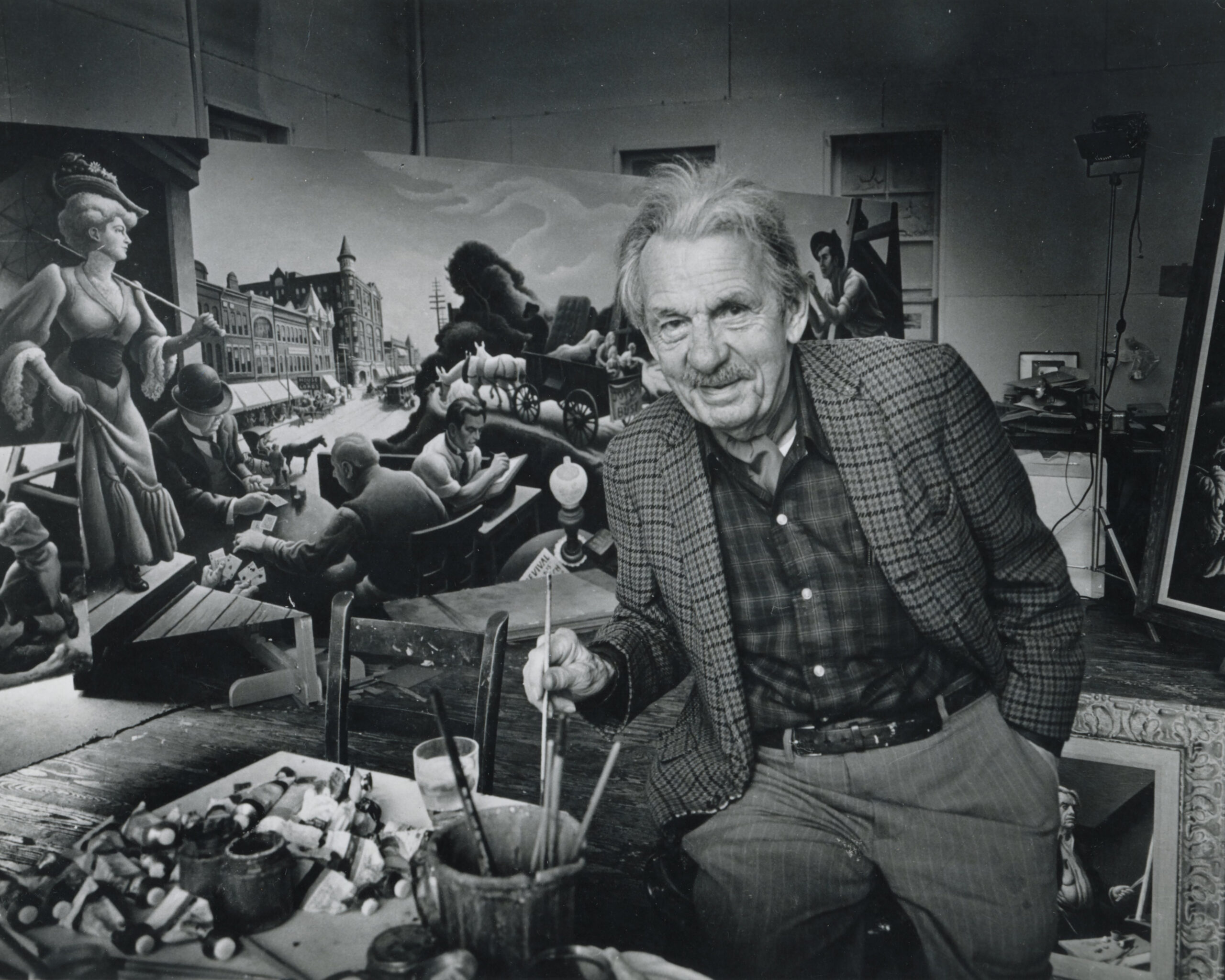
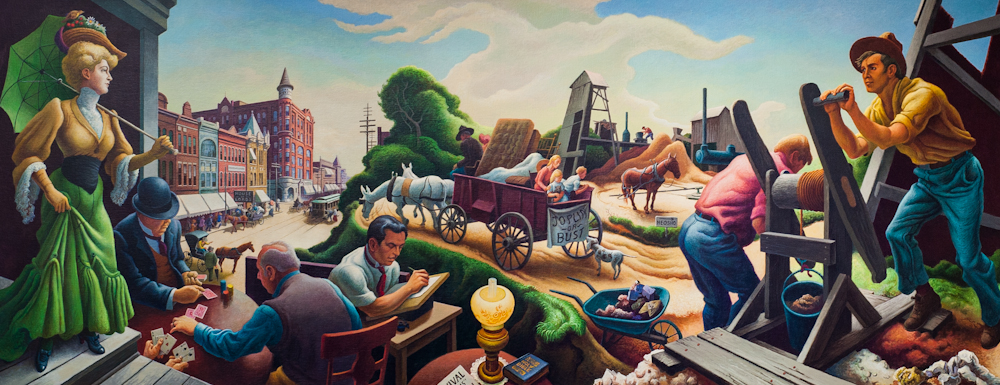
Neosho native Thomas Hart Benton also had a connection to the infamous House of Lords. Benton was cajoled into an art career while having a libation at the House of Lords. At the age of 17, he began his professional artistic career in Joplin as a cartoonist for the Joplin American newspaper. His mural, Joplin at the Turn of the Century, depicts Joplin’s early cultural and mining past. The mural is displayed at the Joplin City Hall. Benton completed the mural in 1973 to commemorate Joplin’s centennial celebration.
Thomas Hart Benton at his studio in Kansas City
"Joplin at the Turn of the Century" by Thomas Hart Benton, 1973