Restoration & Preservation
A Vision Realized and Achieved
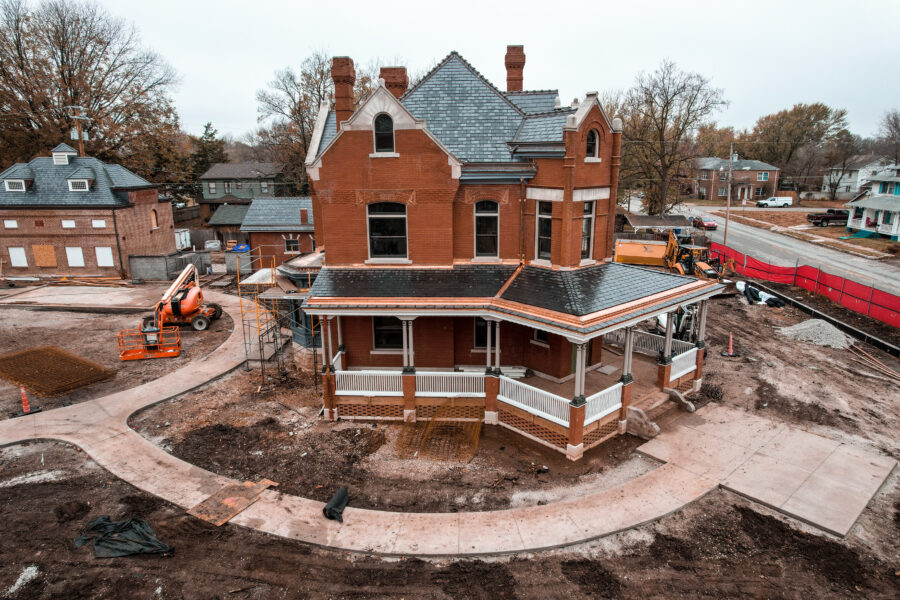
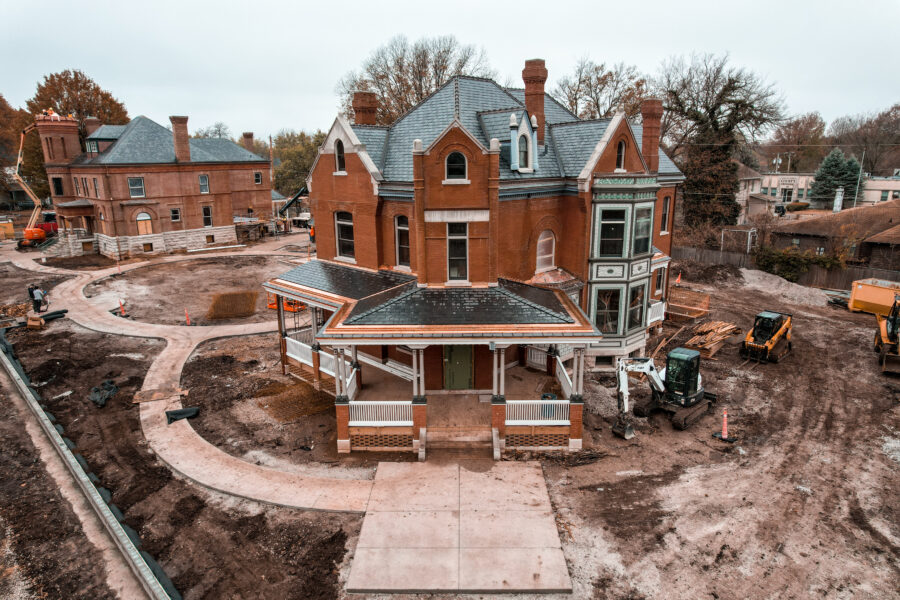
In the heart of Joplin, Missouri, a remarkable transformation has taken place, breathing new life into the city’s rich architectural heritage. David and Debra Humphreys, founders of Joplin Historical Neighborhoods (JHN), have successfully completed the ambitious restoration of two iconic homes in the Murphysburg Historic District: the Charles Schifferdecker House and the Edward Zelleken House. Their vision to transform these historical structures into vibrant living history museums has come to fruition, offering the community an immersive experience of Joplin’s Victorian past.
The Humphreys’ vision for the restoration project was rooted in their deep appreciation for historical preservation and community enrichment. Today, these beautifully restored homes stand as cultural landmarks, preserving the architectural integrity and historical significance of Joplin’s past. They serve as an educational and inspirational community center, celebrating Joplin’s rich history.
Today, these beautifully restored homes stand as cultural landmarks, preserving the architectural integrity and historical significance of Joplin’s past.


Challenges Overcome
The restoration journey was not without its challenges. Extensive structural damage and wear had taken a toll on the buildings over the past century. From deteriorating foundations to weathered facades, each home presented unique structural issues that required meticulous attention and specialized restoration techniques.
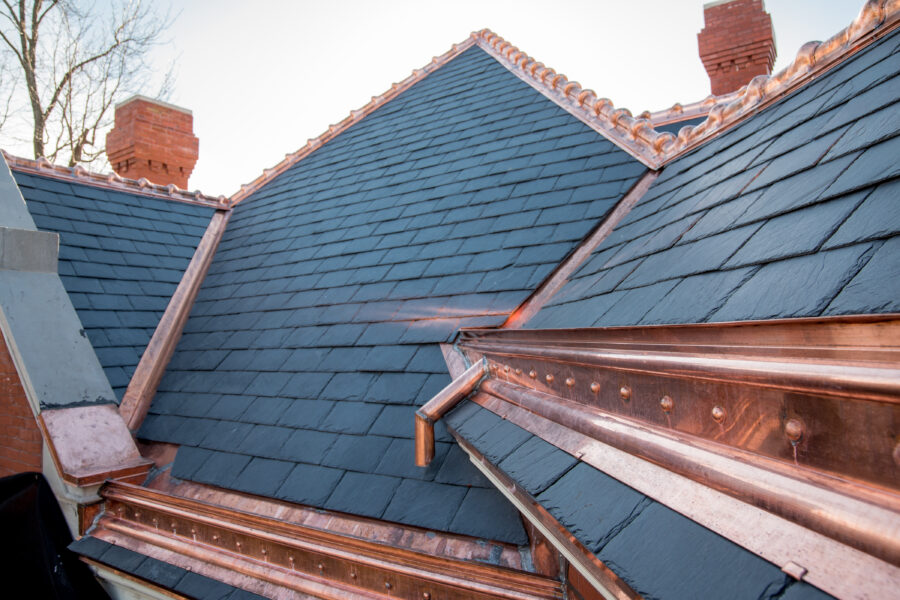
Sourcing period-appropriate materials was another significant challenge. To maintain historical accuracy, the restoration team had to locate and custom-produce materials that matched the original construction, including specific types of wood, brick, stone, and authentic fixtures and fittings.
The Restoration
In 2017 David and Debra Humphreys acquired the former Edward Zelleken and Charles Schifferdeker homes with the intention to save, restore and preserve the original building elements that distinctly characterize these historical landmarks.
By 2018 the Humphreys created the nonprofit Joplin Historical Neighborhoods (JHN) and assembled a team of experts in historic restoration and construction. Skilled artisans and craftsmen utilized both traditional techniques and modern technology to restore the homes. Brad Belk, a renowned local historian and preservation director for JHN, guided the restoration efforts, ensuring every detail was true to the homes’ original designs.
To the team’s best abilities the historic character of the property was retained and preserved. Each property was recognized as a physical record of its time, place and use. The distinctive features, and construction techniques reflected the craftsmanship that further characterized the uniqueness of the historic preserved property.
Structural Examination
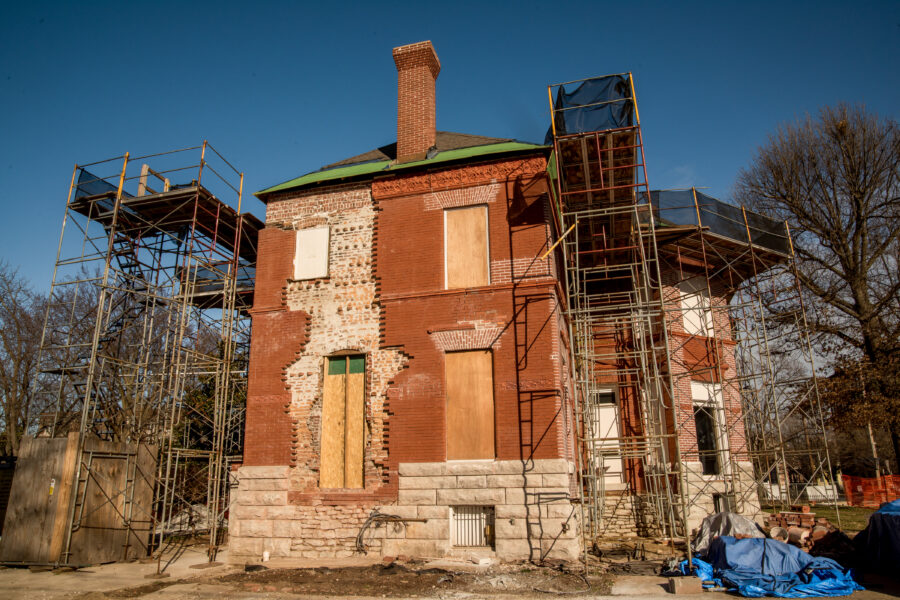
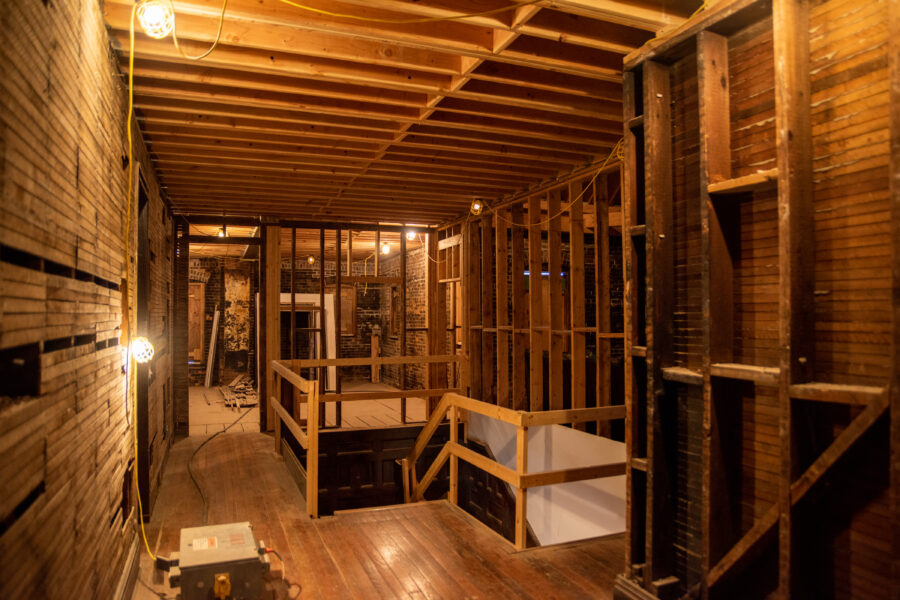
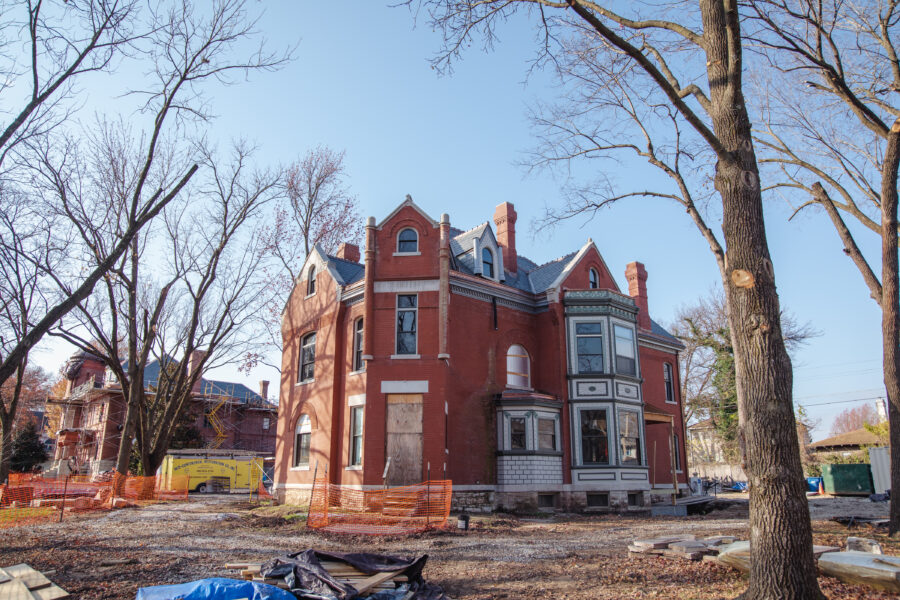
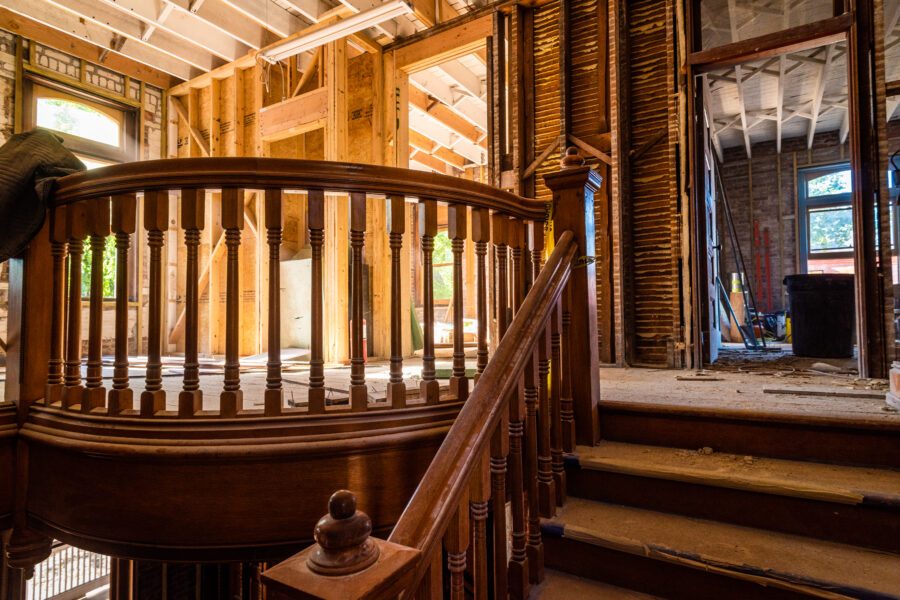
In the beginning the restoration team thoroughly examined the health of each structure. All layers of the buildings needed careful inspection. Peeling back the tiers exposed major structural issues. Addressing them took time and patience. At times work was slow and tedious.
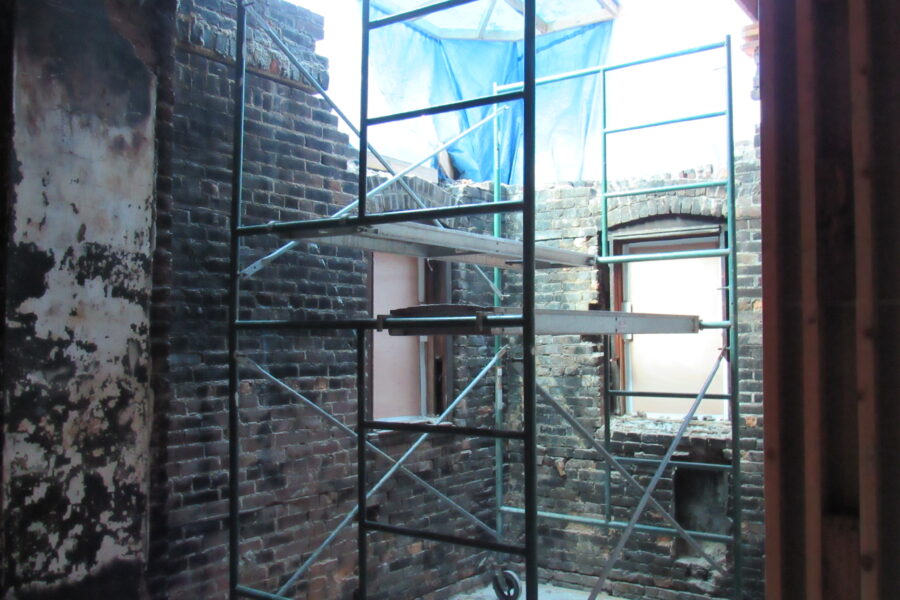
Father-time was another inherent issue to address. By pulling back the building layers the normal wear and tear of these 130-year-old structures became evident. Previous owners’ alterations provided another challenge for the restoration team. The devastating fire at the Schifferdecker home in 1991 presented a host of additional structural and stability issues. Another challenge the restoration team encountered was battling through the COVID pandemic and dealing with a shortage of building materials.
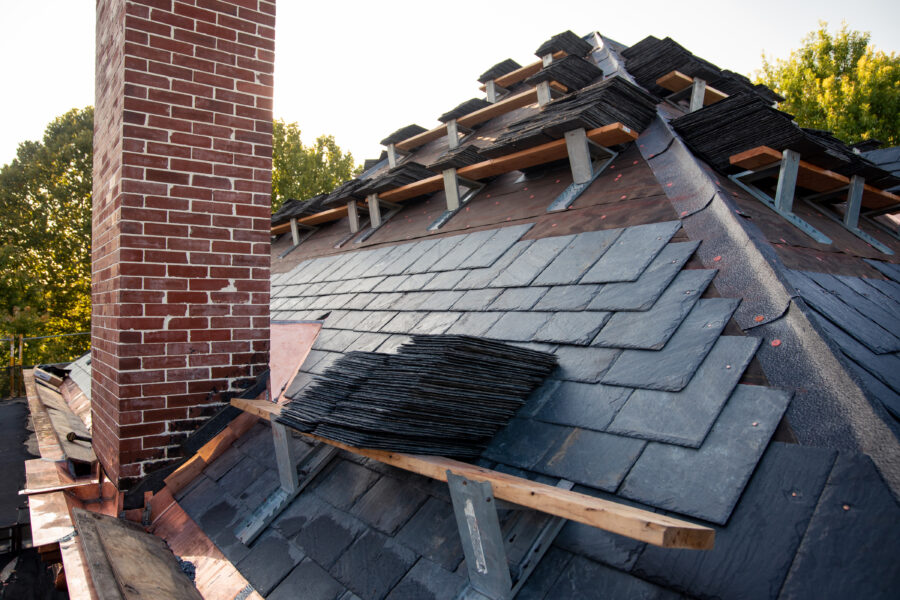
Wherever possible, deteriorated historic features were repaired rather than replaced. However, when the severity of the deterioration was so bad that it could not be repaired, all new replaced features were matched to the previous design, texture, and materials. The replacement of all missing or deteriorated features were documented with physical or pictorial evidence. The restoration goal was to keep the integrity of the visual qualities intact as well as preserve the defining characteristics of each building, the site and environment.
Stabilizing the Buildings
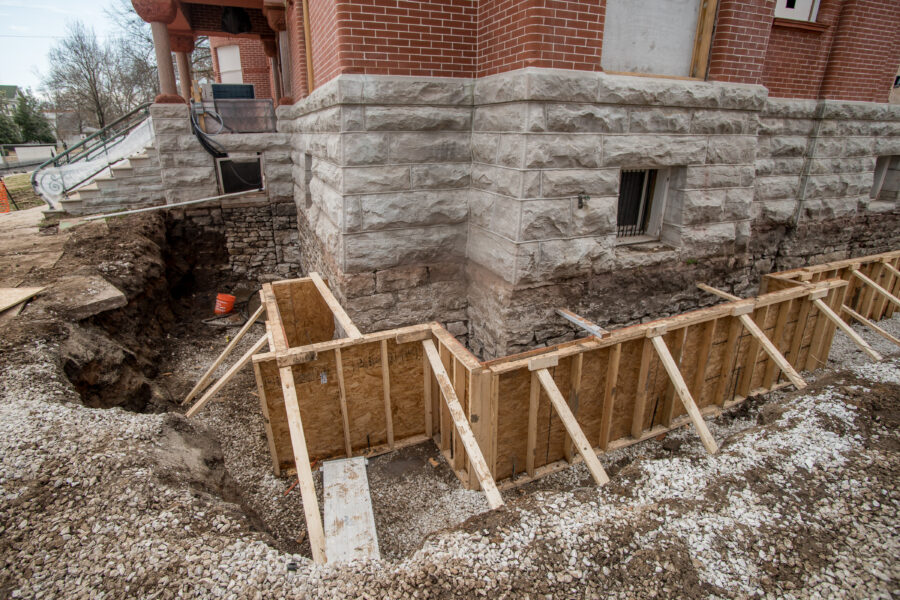
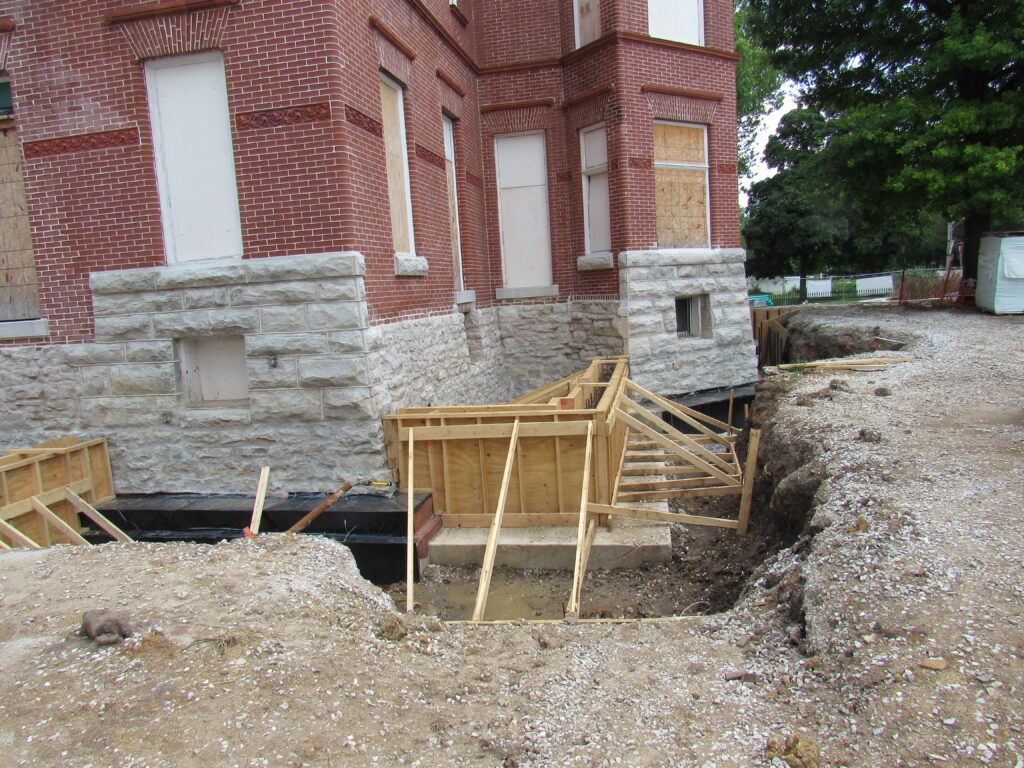
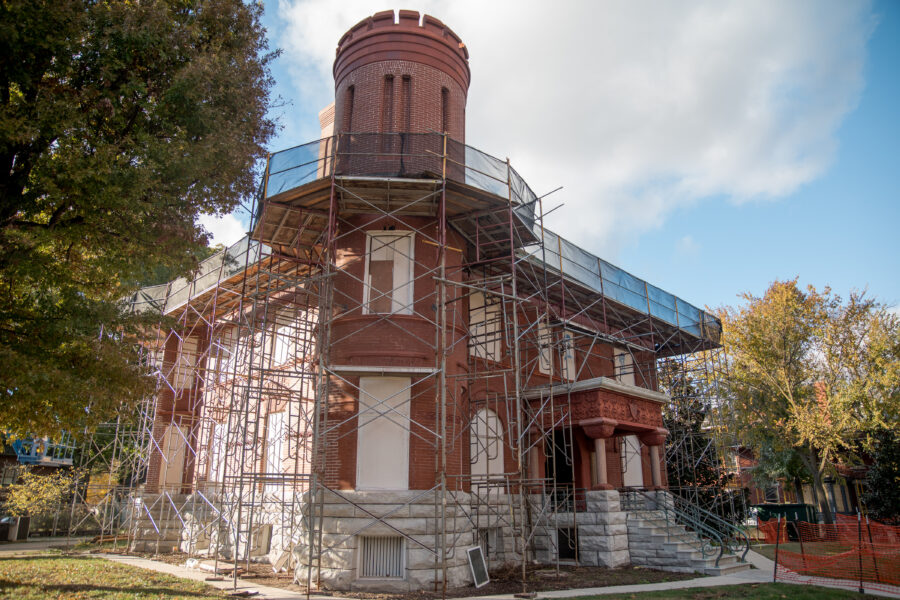
From 2018 to 2021 a considerable amount of the restoration work was devoted to addressing the needs of each building. Some of the structure’s foundations were tipping. To keep the structure from moving any further, poured concrete footings were formed to lock the building into a solid block. New support foundations were placed below the Schifferdecker home and Carriage House.
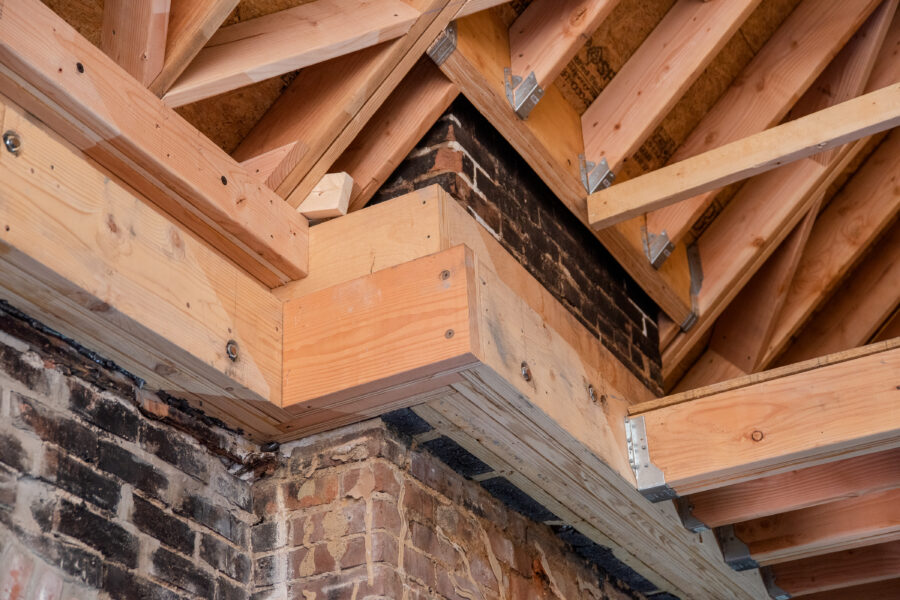
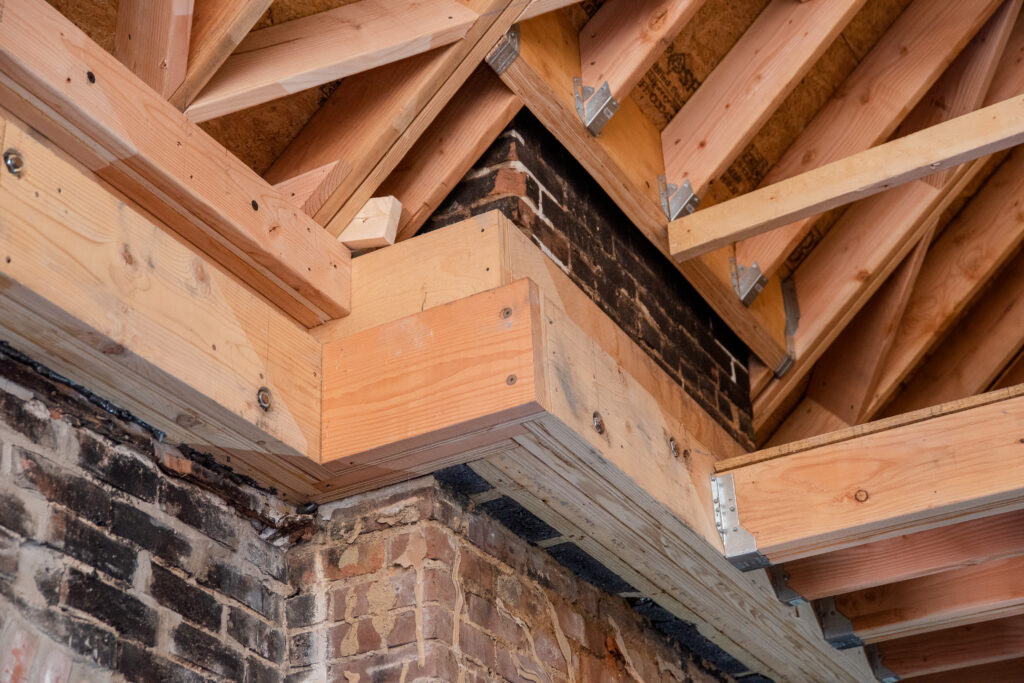
From 2018 through 2019, a five-part bond beam system was constructed, installed and attached to the Schifferdecker home and carriage house. A bond beam is a building element imbedded into the brick walls to lock them in place. This structural horizontal building ban is attached to a new top plate.
Restoration Completed
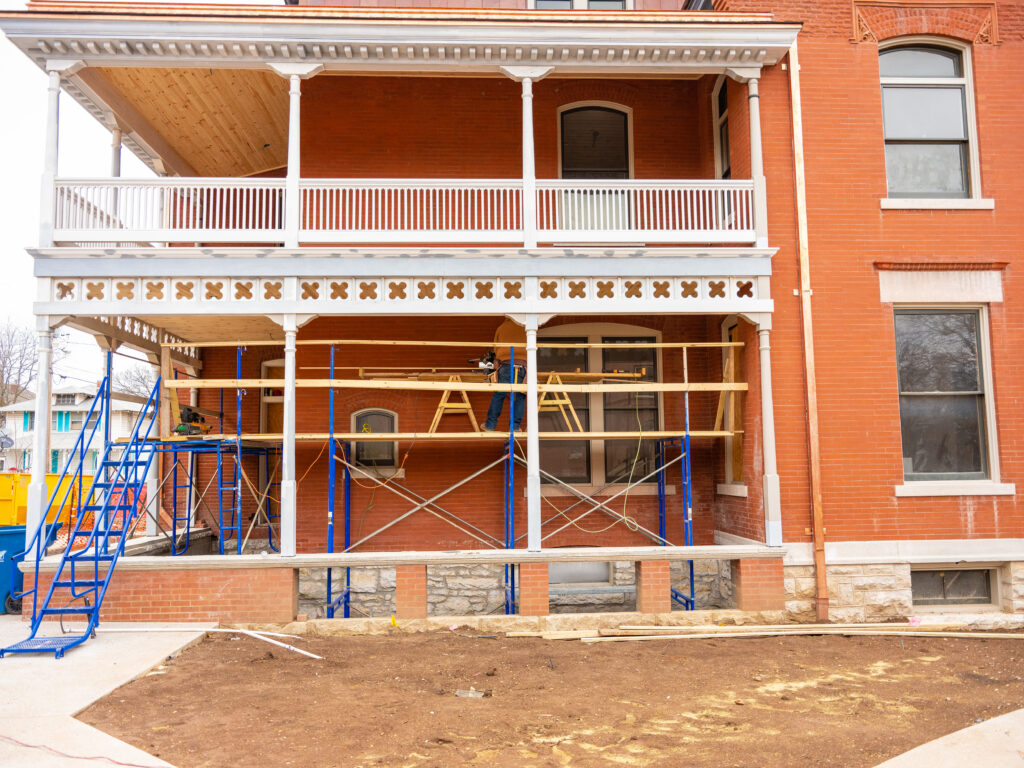
The restoration journey culminated in 2025. The fully restored buildings reflect the amazing talents of the restoration team’s efforts and their application of authentic building materials. The craftsmen’s passion, expertise and desire for perfection are on full display. A century from now these restored landmarks will illustrate the story of two successful German immigrant families that left a lasting impression on the Joplin community during the late Victorian era.
Recycling and Repurposing of Materials
Part of the restoration program involved repurposing building components. They range from the beautiful Carthage limestone veneer from Joplin’s Knights of Columbus Hall to 1890s bricks from razed St. Louis buildings.
Initially the restoration team faced a challenge in locating Carthage limestone. Both homes needed limestone to finish the process. During the late Victorian era, Carthage, Missouri, was the home of rich deposits of limestone.
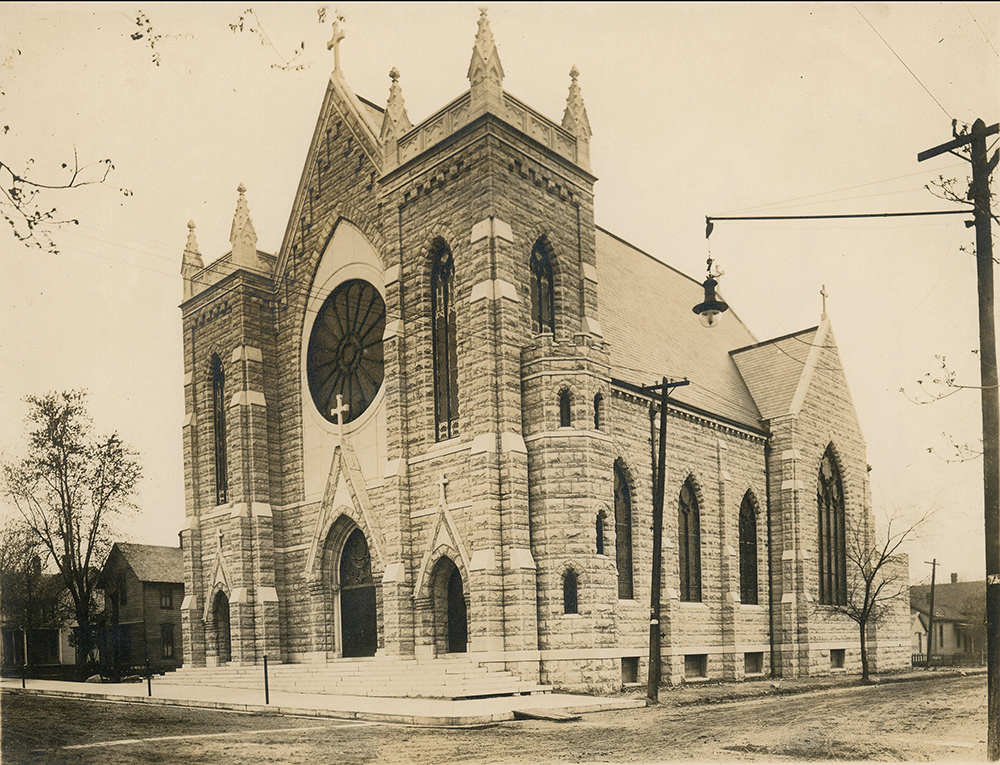
By the time of our restoration the local limestone quarry had closed. Members of St. Peter the Apostle Catholic Church contacted the restoration team offering their Knights of Columbus Hall building’s limestone veneer. The Hall was set for demolition.
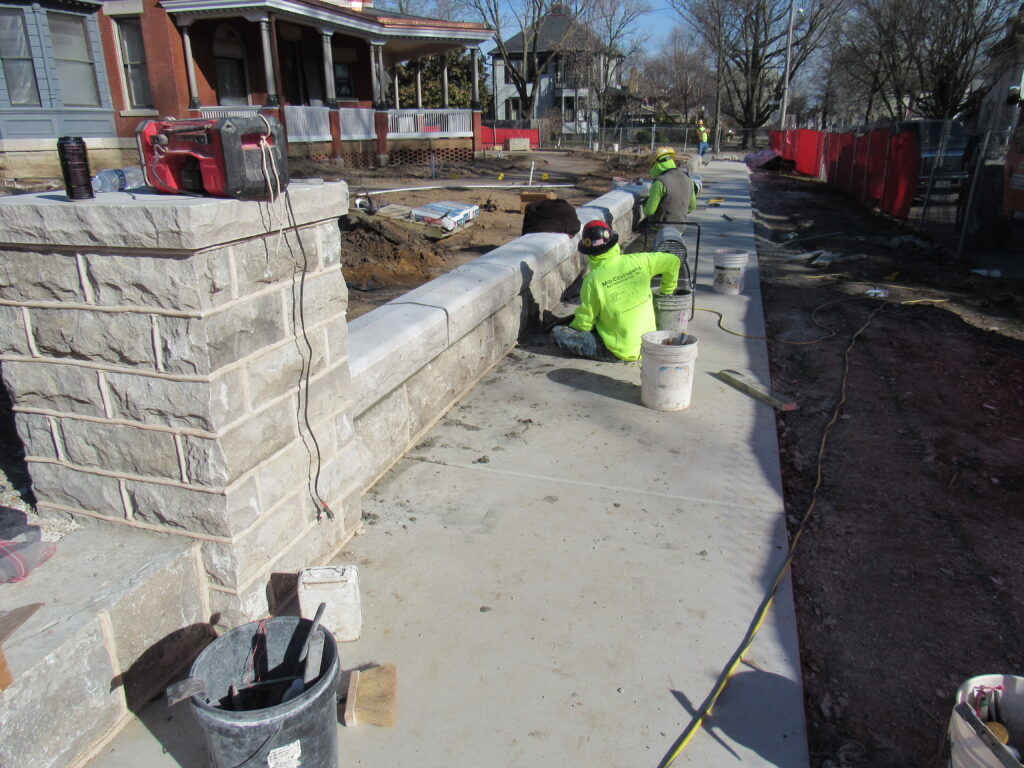
Prior to the razing, during the spring of 2019 Mid-Continental masons were pulled off the restoration site. For over three months their craftsmen carefully removed every single piece of Carthage limestone veneer from the Knights of Columbus Hall, eventually collecting 77 pallets of stone.
The building material was repurposed and used as a new perimeter wall that encircles the Zelleken property. The new wall connects to the original 1890s Schifferdecker limestone wall. The repurposed Carthage stone was also incorporated into a wall that connects the Schifferdecker Carriage House to the Zelleken garage.
In addition, the restoration team was introduced to salvage companies that remove architectural components and other original building materials from houses before undergoing demolition.
In 1991 the Schifferdecker home was engulfed in flames. The fire compromised much of the west wall. During the restoration masons removed damaged bricks that left gaping holes in the wall. The restoration team discovered 1890 vintage replacement bricks at a salvage yard in St. Louis. The bricks came from razed late Victorian structures. Pallets of era-appropriate bricks were purchased and shipped to Joplin. Masons used the recycled bricks to complete the west wall of the Schifferdecker home.
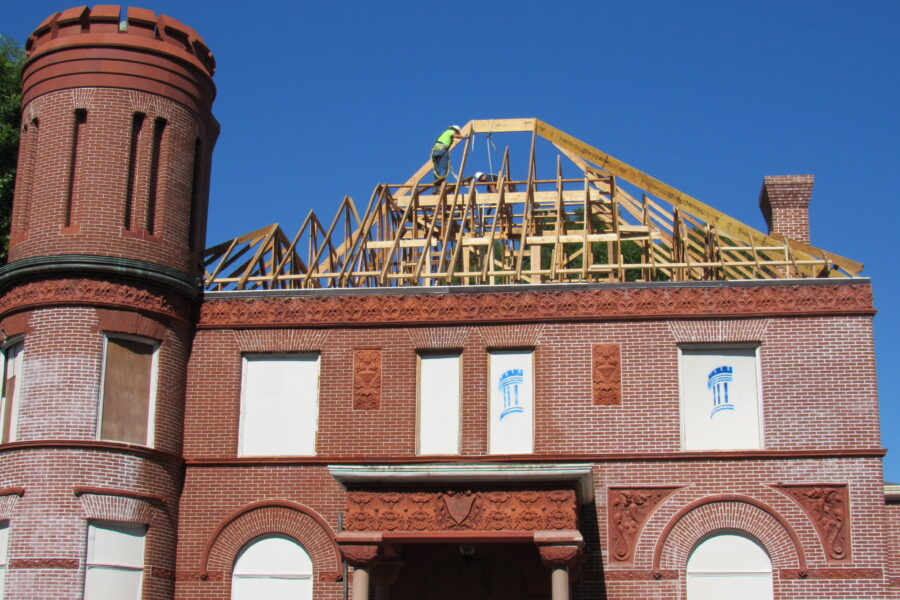
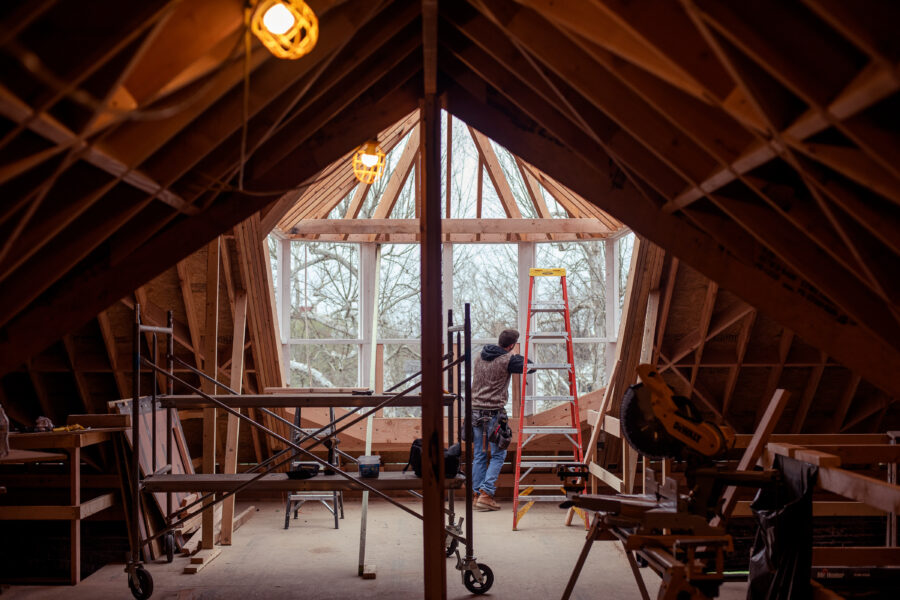
Seasoned one hundred-year-old oak was utilized in constructing the stick roof for the Schifferdecker home. The aged wood was purchased from the American Timber Salvage in St. Louis.
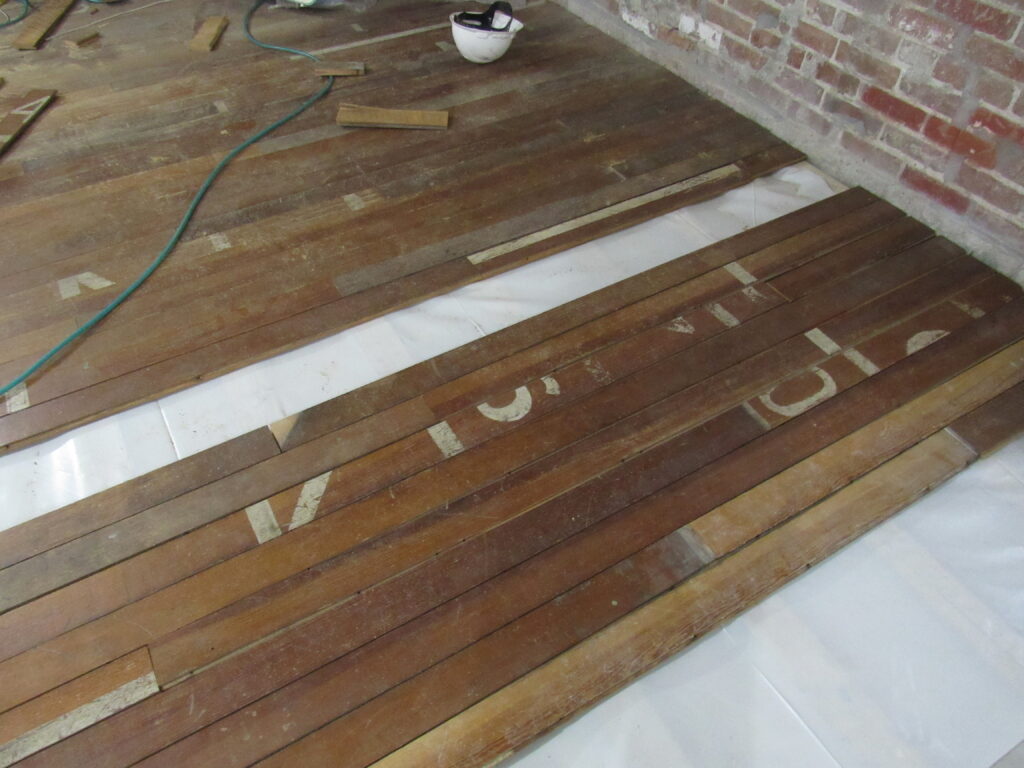
In 2021 Schuber Mitchell Homes purchased the Hoffmeister home on North Range Line Road. Representatives of Schuber Mitchell Homes offered the restoration team the home’s wooden floors. Prior to the razing the home, the restoration team removed the wooden floors from the stately residence. The recycled wood was cleaned, refinished and installed in the Welcome Center and the Carriage House.
In 2020 Boyd Metals purchased the Gahagan Paper Company. Audie Dennis contacted the JHN restoration team offering various woodwork from the building. In 2021 the JHNI restoration team removed an array of seasoned boards. The recovered wood was repurposed into the finishes of the Zelleken home’s back porch and window ledge in the Skeleton Room gallery.
The restoration team was proud to offer environmental savings by recycling and repurposing limestone, brick, and wood. Purchasing historic and used materials helps prevent landfill waste and is a great way to give new life to discarded details.
Most climate scientists agree that action in the immediate timeframe is crucial to stave off the worst impacts of climate change. Reusing existing buildings and their materials can assist in avoiding unnecessary carbon outlays while helping communities achieve their carbon reduction goals in the near term.
A Bright Future
With the restoration complete, the homes are open to the public, offering guided tours, educational programs, and special events that celebrate Joplin’s Victorian heritage. Our hope is that the JHN Museum will become a beacon of historical appreciation, inspiring similar preservation efforts in other communities.
The restoration of the Schifferdecker and the Zelleken homes is more than a preservation project; it is a celebration of the city’s rich past and a beacon of hope for its future. Through dedication, expertise, and community spirit, David and Debra Humphreys have brought history to life, one home at a time.